ADHD Masking at Work
31% of neurodivergent employees haven't told their employer. Learn about disclosure decisions, legal protections, and why the workplace demands the most masking.
Work is where masking hits hardest. The stakes are high. The performance lasts all day. And the environment often demands exactly what ADHD brains struggle with: sustained attention, organisation, and appearing consistently competent.
Why most people stay silent
A 2024 UK survey of over 1,000 employees found 31% of neurodivergent workers hadn't told their manager or HR about their neurodivergence.
The reasons: 44% said it's private. 37% feared assumptions. 34% felt there was too much stigma. 29% worried about career impact.
Other research found 92% of ADHD employees worry about coworkers learning their diagnosis. 56% believe ADHD led to missed promotions or lost responsibilities. 75% reported increased micromanagement after disclosure.
The fear isn't paranoia. Half of hiring managers would hesitate to employ someone from a neurominority group.
The employment impact
ADHD affects employment outcomes significantly.
Research found ADHD was associated with 10% lower workforce participation, 33% lower earnings, and higher rates of receiving social assistance.
ADHD workers show 4-5% reduced work performance, twice the sickness absence, and twice the workplace accidents.
Untreated ADHD adults lose an average of 22 days of productivity per year.
A systematic review of 79 studies confirmed ADHD is linked to lower performance, higher turnover, higher unemployment, and lower job satisfaction. Inattention was the most common workplace challenge.
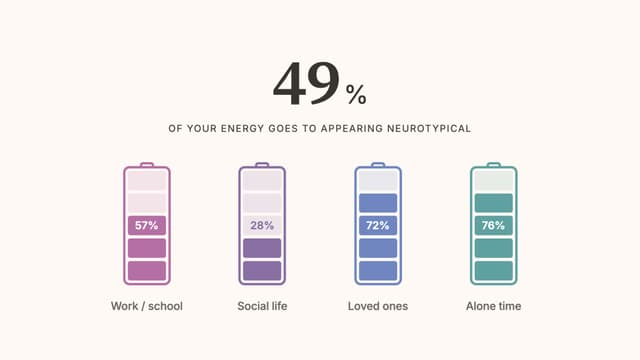
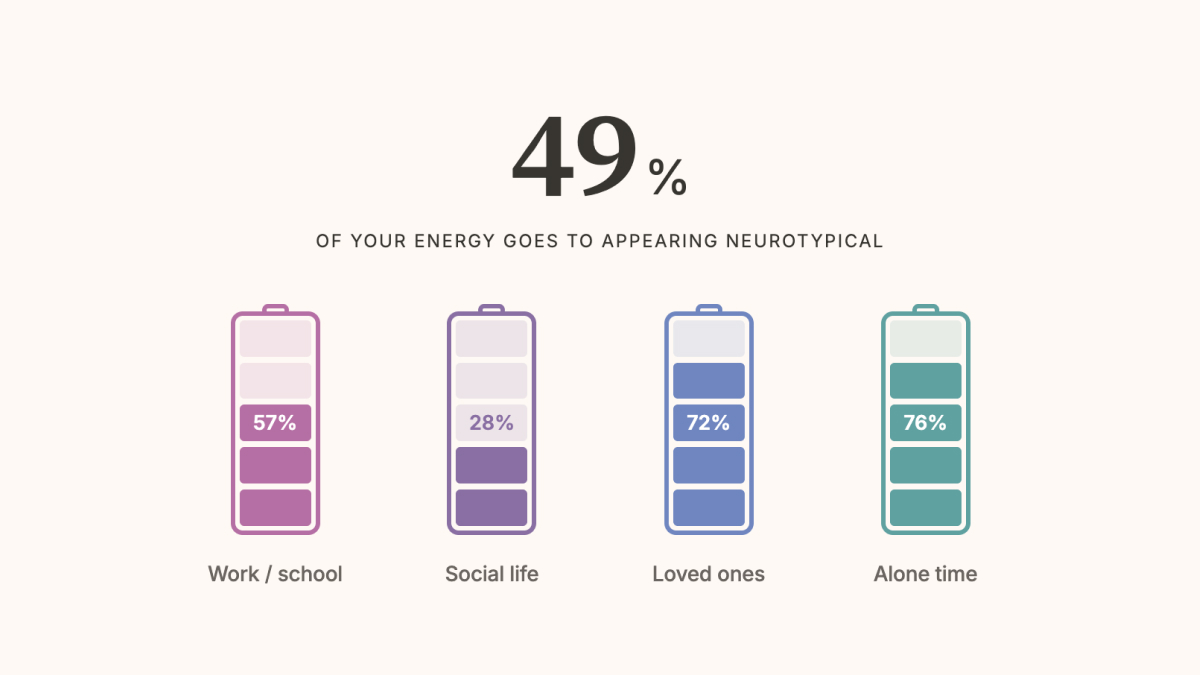
Try the Masking Energy Calculator
See where your energy goes when you're hiding your ADHD. Takes 3-4 minutes.
Start this toolWorkplace masking
A UK study surveyed over 400 adults about workplace masking. All groups (autistic, other neurodivergent, and neurotypical) used masking to some degree.
But neurodivergent workers reported unique additional pressures driven by limited understanding of their conditions.
Masking was linked to exhaustion, burnout, and identity confusion. People weren't masking because they wanted to fit in. They were masking because they feared what would happen if they didn't.
The meeting problem
There's no research specifically on "meeting fatigue" for ADHD, but the underlying evidence explains it.
ADHD adults show sustained attention deficits with significant performance drops over 20-minute focus periods. Meetings require exactly this kind of attention.
Every minute of a long meeting costs ADHD brains more than neurotypical colleagues. Add the masking required to appear engaged, resist checking your phone, and track a wandering conversation, and meetings become exhausting.
Open-plan office challenges
A survey of 2,000 UK office workers found 31% of neurodivergent people reported sensory overload as a significant workplace challenge. Over 40% with ADHD identified lighting as a key factor.
22% of neurodivergent applicants had declined job offers due to office design. 15% left jobs for the same reason.
ADHD brains are distractible by design. Open-plan offices optimised for collaboration are terrible for focus.
Legal protections in the UK
Under the Equality Act 2010, you have a disability if you have a mental impairment with "substantial and long-term adverse effect" on daily activities.
ADHD counts as a mental impairment but isn't automatically a disability. It depends on your specific situation.
A 2025 tribunal ruling clarified something important: appearing competent in some areas doesn't disqualify you. The test compares your abilities with versus without the impairment. Substantial impact on even one daily activity is enough.
This matters for masking. Appearing competent doesn't disqualify you from protection.
When accommodations work
Accommodations are effective when actually provided.
Research found 79% of ADHD adults reported their condition negatively affects work. 58% had received workplace adjustments.
After accommodations: 87% reported reduced stress and 81% reported improved productivity.
Most effective: remote/hybrid work, flexible hours, noise control. Also helpful: written instructions, visual reminders, task breakdown.
Most ADHD accommodations cost under £500. The UK Access to Work scheme can fund these.
Making the disclosure decision
There's no right answer.
Benefits: access to formal accommodations, explanation for difficulties, legal protection.
Risks: stigma, being defined by diagnosis, micromanagement, career limitations.
Options: disclose to HR for accommodations but not your team. Tell specific trusted colleagues. Request adjustments without specifying diagnosis.
If your workplace is hostile to difference, disclosure may not be worth it. If your workplace actively promotes neuroinclusion, disclosure may unlock support that reduces your masking load.
Only you can weigh these factors.
Tools mentioned in this article
Common questions
There's no universal answer. Benefits include accommodations and legal protection. Risks include stigma and career impact. Strategic disclosure to HR may differ from telling colleagues.
ADHD is recognised as a mental impairment, but isn't automatically classified as a disability. If it substantially affects daily activities long-term, you're entitled to reasonable adjustments.
Most effective are remote/hybrid work, flexible hours, and noise control. Other helpful adjustments include written instructions and task breakdown. Most cost under £500.
ADHD involves sustained attention deficits. Research shows performance drops significantly over 20-minute focus periods. Meetings demand exactly what's hardest for ADHD brains.
Sources & references
- CIPD (2024). Neuroinclusion at Work Report.
- Pryke-Hobbes, A., et al. (2023). Masking as a Strategy for Neurodivergent Employees. PLoS ONE, 18(9), e0290001.
- Fletcher, J.M. (2014). The effects of childhood ADHD on adult labor market outcomes. Health Economics, 23(2), 159-181.
- McNamara, J. (2025). ADHD Workplace Accommodations Study. University of New Hampshire.
- Stedman v Haven Leisure Limited [2025] EAT 82.