ADHD Masking Examples
Real examples of how ADHD masking shows up in daily life. Suppressing fidgeting, scripting conversations, hiding forgetfulness, and the energy it costs.
ADHD masking isn't abstract. It shows up in specific, exhausting behaviours that many people don't recognise as masking until someone names them.
Suppressing physical symptoms
Forcing yourself not to fidget. Sitting on your hands in meetings. Crossing your legs to stop them bouncing. Pressing your feet hard into the floor. The constant background effort of appearing physically calm.
Research suggests fidgeting might actually help ADHD brains focus. When you suppress it to look professional, you may be removing a tool your brain was using.
Holding back interruptions. You know the answer. The thought is urgent and will disappear if you don't say it now. Instead, you clench internally, waiting for a pause. By the time it comes, you've lost the thought anyway.
Managing hyperactive energy. Pacing before calls so you can sit still during them. Scheduling movement breaks so you can appear calm the rest of the day.
Scripting social interactions
Rehearsing conversations in advance. Planning what you'll say before phone calls. Running through possible responses before meetings. Having scripted answers ready for small talk.
One person in a research study said they "didn't know how to be a person" without rehearsing first. The scripting extends beyond words to expressions, body language, and appropriate emotional responses.
Copying social cues. Watching how neurotypical people respond and mirroring it. Studying films for social scripts. Observing coworkers to learn what "normal" looks like.
Monitoring in real-time. Am I making enough eye contact? Have I talked too much? Did that land correctly? A running commentary that divides your attention between the conversation and your performance of it.
Hiding executive function gaps
Systems hidden from view. Smartphones, calendars, alarms, reminder apps, written instructions, structured routines. The masking part isn't using these tools. It's hiding that you need them while pretending to remember things naturally.
Overworking to compensate. Working nights and weekends not because you're ambitious, but because it takes you longer. Arriving early to seem organised rather than because you need the buffer.
Avoiding tasks you'll struggle with. Building your life around your weaknesses without anyone noticing. Never volunteering for admin. Steering conversations away from topics requiring recall.
"I'll check and get back to you." A script to buy time because you've already forgotten what was just said.
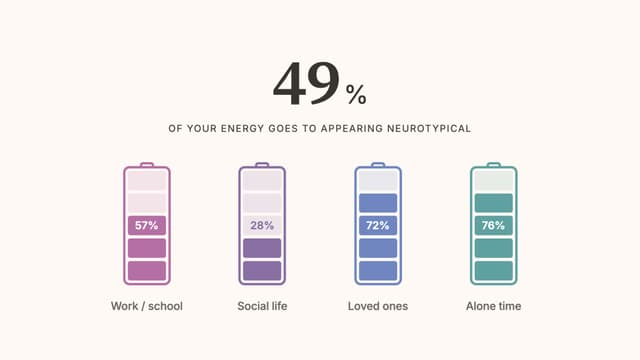
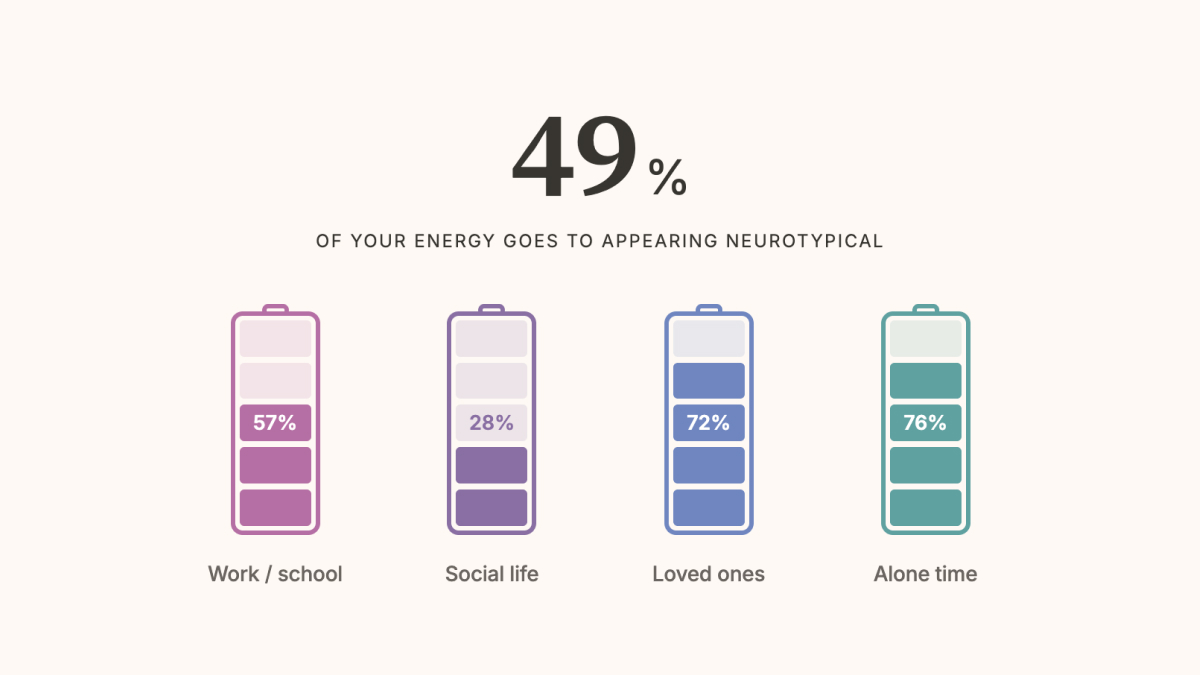
Try the Masking Energy Calculator
See where your energy goes when you're hiding your ADHD. Takes 3-4 minutes.
Start this toolEmotional masking
Suppressing reactions. Feeling a surge of anger or frustration and hiding it completely. Keeping your expression neutral when you're overwhelmed. Waiting until you're alone to process emotions.
Pretending to be fine. "I'm good" when you're not. Smiling through exhaustion. Acting engaged when you're dissociating.
Hiding sensitivity. ADHD brains often experience rejection and criticism intensely. Many people learn to hide these reactions entirely.
The cost is disconnection. You're present in body but checked out in every way that matters.
The energy cost
The "social battery" metaphor captures something real. Every masked interaction costs energy. A day of performing neurotypicality can leave you unable to function in the evening.
Research on ADHD women found a clear pattern: more masking meant lower life satisfaction and more depressive symptoms.
Recovery isn't rest. It's actively undoing the tension of sustained performance.
Masking you might not recognise
Double-checking everything because you know you make mistakes, but hiding that this takes extra time.
Arriving extremely early because on-time is impossible, and early at least looks like conscientiousness.
Avoiding eye contact by appearing to take notes, so you can look away without seeming rude.
Over-explaining to prove you understood, when really you're buying time to process.
Choosing texting over calls because you can edit responses and hide processing delays.
Never admitting you forgot something, instead implying you need it explained differently.
When masking becomes invisible
The trap is when masking feels like "just being responsible" or "just trying hard." You can't see the cost. You only notice the exhaustion, depression, and burnout that arrive later.
Recognising specific masking behaviours is the first step to questioning whether they're all necessary.
Tools mentioned in this article
Common questions
Research suggests fidgeting may help ADHD brains maintain focus. Suppressing it may remove a helpful self-regulation mechanism.
Healthy coping works with your brain. Masking works against it to appear neurotypical. Using a calendar is coping. Pretending you don't need one while secretly panicking is masking.
RSD is not a formally recognised diagnostic term. Emotional dysregulation in ADHD is well-documented, but "RSD" as a distinct condition hasn't been validated in research.
Masking requires constant cognitive effort. You're monitoring behaviour, suppressing impulses, and performing simultaneously. That drains energy neurotypical people don't spend.
Sources & references
- Ginapp, C.M., et al. (2023). The experience of young adults with ADHD and their perceptions of masking. SSM - Qualitative Research in Health, 3, 100223.
- Kysow, K., Park, J., & Johnston, C. (2017). The Use of Compensatory Strategies in Adults with ADHD. ADHD Attention Deficit and Hyperactivity Disorders, 9(3), 161-171.
- Canela, C., et al. (2017). Patients with ADHD and their partners. PLOS ONE, 12(9), e0184964.