ADHD Masking in Women
Women with ADHD are diagnosed nearly 4 years later than men. Learn why masking leads to misdiagnosis, mental health struggles, and what the research shows.
Women with ADHD are diagnosed almost four years later than men. That's not because their symptoms are milder. It's because they've learned to hide them.
The diagnostic delay
The largest study on this analysed data from over 85,000 people with ADHD. Women were diagnosed at an average age of 23.5 years. Men at 19.6 years. That's a 3.9-year gap.
Those years aren't neutral. Before diagnosis, women had nearly double the rates of anxiety and mood disorders compared to men. Self-harm events were more than three times higher.
Late diagnosis doesn't mean mild ADHD. It means years of struggling without understanding why.
The ratio myth
The stereotype says ADHD is a male condition. Childhood clinical data seemed to support this, with boys diagnosed anywhere from 2 to 10 times more often than girls.
But those numbers reflected who got referred, not who had ADHD.
Population studies paint a different picture. When you look at communities rather than clinics, the ratio narrows to about 2:1 or even approaches 1:1. By adulthood, the ratio is close to equal.
The NHS Adult Psychiatric Morbidity Survey found men and women equally likely to think they have ADHD. Professional diagnosis rates were identical at 1.7% for both.
ADHD isn't rarer in women. It's just diagnosed less.
Why women get missed
The prototype problem. The image of ADHD is a hyperactive boy disrupting class. When clinicians, teachers, and parents look for ADHD, they're often looking for that picture. Studies show therapists diagnose ADHD twice as often when identical cases are labelled as boys.
Internalising versus externalising. Girls more often present with inattentive symptoms rather than hyperactive-impulsive ones. Daydreaming. Disorganisation. Anxiety. These don't disrupt classrooms, so they don't trigger referrals.
Teacher bias. Research found UK teachers recognised girls' difficulties but were less likely to recommend clinical referral. Only 15% thought medication might help a girl meeting ADHD criteria.
Parent underreporting. Studies comparing parent ratings to objective measures found parents underrated girls' hyperactive symptoms. Girls needed more problems before meeting diagnostic criteria.
Successful masking. By age 11-14, neurodivergent girls already use more camouflaging than neurotypical peers. By adulthood, this masking is deeply ingrained.
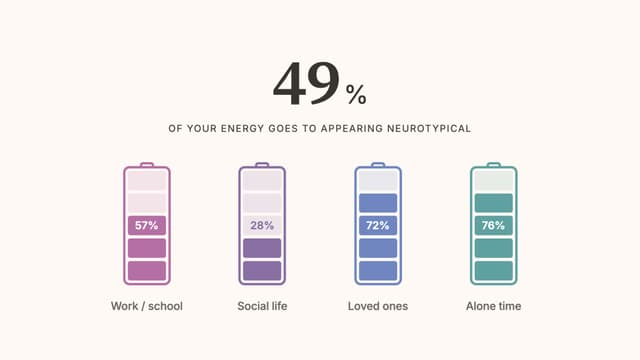
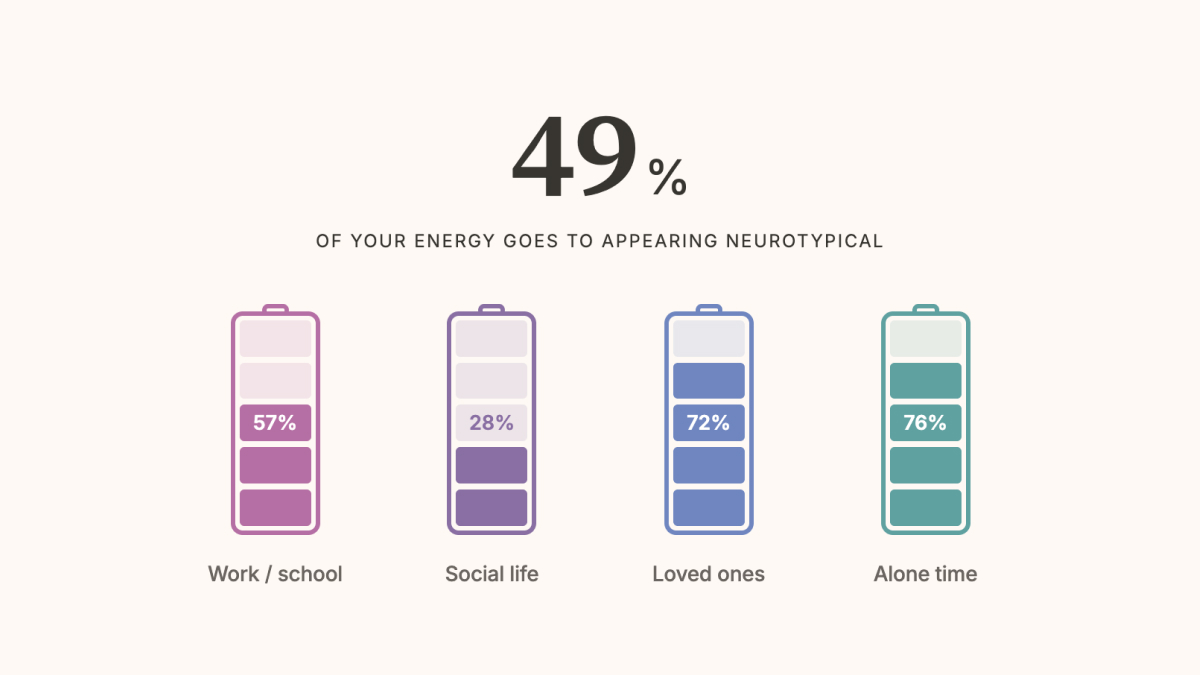
Try the Masking Energy Calculator
See where your energy goes when you're hiding your ADHD. Takes 3-4 minutes.
Start this toolThe UK picture
UK data shows the same patterns. By 2018, recorded diagnosis rates were 255 per 10,000 boys versus 68 per 10,000 girls. For adults: 74 per 10,000 men versus 20 per 10,000 women.
The male-to-female ratio decreases with age, reaching near-parity over 40. This doesn't mean ADHD develops in older women. It means older women finally get diagnosed after decades of masking.
Since 2000, diagnoses rose over 1,000% for women. The condition didn't become more common. Recognition improved.
NICE guidelines explicitly state ADHD is under-recognised in girls and women, with lower referral rates and higher misdiagnosis rates.
The mental health burden
Women with ADHD carry a disproportionate mental health burden.
A study of over 40,000 adults found both genders had 4-9 times higher rates of anxiety, depression, and bipolar disorder compared to non-ADHD adults. But the gap was significantly larger in women.
Long-term research found 68% of women with ADHD were diagnosed with major depression, compared to 34% without ADHD. The suicide rate was three times higher in women with ADHD.
When researchers accounted for masking levels, the mental health difference between neurodivergent and neurotypical groups diminished. Masking partially explains why neurodivergent women struggle more.
UK expert consensus
In 2020, the UK ADHD Partnership published expert guidance on ADHD in females. Their conclusions:
The diagnosis gap exists partly due to lack of recognition and referral bias. Women present with different symptom profiles. And compensatory strategies mask underlying ADHD symptoms.
Gender role expectations contribute. Women are socialised to be less disruptive and more compliant. Meeting those expectations while having ADHD requires masking that men aren't pressured to perform.
This isn't about women having "hidden" ADHD. It's about a system that wasn't built to see them.
What this means
If you're a woman questioning whether you have ADHD, your doubt may itself be evidence. Years of working twice as hard to appear normal. Years of anxiety and depression treated without addressing the underlying cause.
The four-year diagnostic delay represents real costs: money, time, mental health, opportunities.
Getting assessed isn't about labelling yourself. It's about finally understanding why your brain works the way it does.
Tools mentioned in this article
Common questions
Yes. Population studies show roughly equal prevalence. The NHS Adult Psychiatric Morbidity Survey found men and women equally likely to think they have ADHD.
Girls more often present with inattentive symptoms that don't disrupt classrooms. Teachers are less likely to refer them. Parents underrate girls' hyperactive symptoms. The ADHD "prototype" is male.
Women are more likely to internalise difficulties, and sustained masking is linked to worse mental health. Years of undiagnosed ADHD leaves a mark.
No. Late diagnosis is increasingly common. UK diagnoses for women have risen over 1,000% since 2000. Understanding your brain later is still valuable.
Sources & references
- Skoglund, C., et al. (2024). ADHD and Risk for Nonaffective Psychotic Disorder. Journal of Child Psychology and Psychiatry.
- McKechnie, D., et al. (2023). Sex differences in ADHD in the UK, 2000-2018. BJPsych Open, 9(4), e121.
- Young, S., et al. (2020). Females with ADHD: An expert consensus statement. BMC Psychiatry, 20(1), 404.
- Hinshaw, S.P., et al. (2022). ADHD in girls and women. Journal of Child Psychology and Psychiatry, 63(4), 484-496.
- Solberg, B.S., et al. (2018). Gender differences in psychiatric comorbidity. Acta Psychiatrica Scandinavica, 137(3), 176-186.