Dopamine Menu Examples: 50+ Ideas by Effort Level
50+ dopamine menu ideas sorted by effort level, from zero-friction starters to rare specials. Built for ADHD brains that go blank when asked 'what do you want to do?'
The hardest part of building a dopamine menu isn't understanding the concept. It's staring at a blank page and trying to think of things you enjoy while your brain produces absolutely nothing. This list exists to fix that problem.
These are starting points, not a prescription. Skim through, notice what sparks something, ignore what doesn't. Your dopamine menu should be personal. These examples are just here to get the ideas flowing.
Starters: almost zero effort
Starters are for the moments when getting off the sofa feels impossible. No preparation, no commitment, no shoes required.
- Watch a comfort YouTube channel
- Scroll through saved memes or reels
- Stroke or play with your pet
- Listen to a favourite song on repeat
- Smell something nice: coffee, a candle, fresh air from an open window
- Eat a piece of fruit or a favourite snack
- Text a friend a meme (no conversation required)
- Do a two-minute guided breathing exercise
- Watch rain, clouds, or birds from the window
- Wrap yourself in a blanket and do nothing for five minutes
- Doodle or scribble with no purpose
- Re-read a favourite Reddit thread or article you saved
- Put on a podcast you've been meaning to try
The point of Starters isn't to feel amazing. It's to create a small shift, enough to make the next thing possible.
Mains: medium effort, genuine engagement
Mains are activities that require some initiation but tend to sustain themselves once you start. These are your reliable mood-changers.
- Go for a 15–30 minute walk (no destination needed)
- Cook or bake something you actually enjoy eating
- Play a video game for a set amount of time
- Work on a creative project: drawing, writing, music, photography
- Do a yoga or stretching session (even 10 minutes)
- Rearrange or tidy one small area (a shelf, a drawer, your desk)
- Watch an episode of a show you're properly into
- Read a book that has nothing to do with self-improvement
- Garden, repot a plant, or water your windowsill herbs
- Go to a café alone with no agenda
- Play with a musical instrument
- Do a puzzle: jigsaw, crossword, Sudoku, Wordle
- Have a proper bath or shower with products you like
Sides: social and sensory
Sides are activities that work alongside other things or that regulate your mood through connection and sensory input.
- Put on a playlist that matches or shifts your mood
- Call or voice-note a friend
- Light a candle or incense
- Change into clothes that feel good on your skin
- Go outside and stand in the sun for a few minutes
- Watch a live stream: gaming, music, crafts, anything
- Sit in a different room or a different spot than usual
- Use a fidget toy, stress ball, or textured object
- Chew gum or eat something crunchy
- Look at old photos on your phone
- Send a "thinking of you" message to someone you like
- Dance badly to one song with the door closed
Desserts: treats and rewards
Desserts are bigger hits: things you save for when you need a proper boost or want to mark a good day.
- Order your favourite takeaway
- Buy a book, game, or small item you've been eyeing
- Watch a film you've been saving
- Have a long phone call with someone who gets you
- Take a nap without guilt
- Go to a bookshop, charity shop, or market and browse
- Get a coffee from somewhere nicer than usual
- Spend an hour on a hobby with no interruptions
Specials: rare, high-investment experiences
Specials are the big ones. You might use them once a month or less, but having them on the menu means you remember they're options.
- Book a day trip somewhere new
- Go to a gig, comedy show, or live event
- Try a class you've been curious about: climbing, pottery, life drawing
- Plan a weekend away
- Visit a museum or gallery with no agenda
- Have a meal at a restaurant you've wanted to try
- Spend a full day on a passion project with no obligations
Building your own menu
These examples are meant to spark ideas, not to be copied wholesale. The best dopamine menu items are specific to you: the particular podcast, the exact café, the specific friend whose voice notes always help.
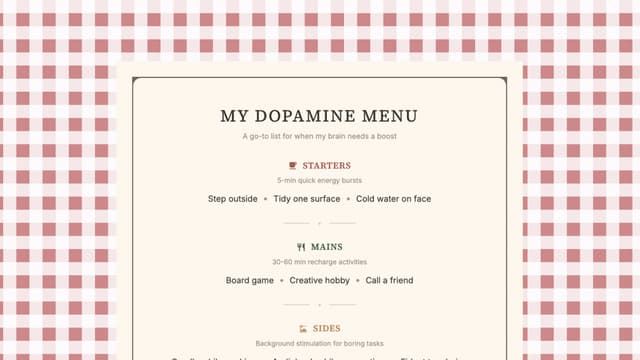
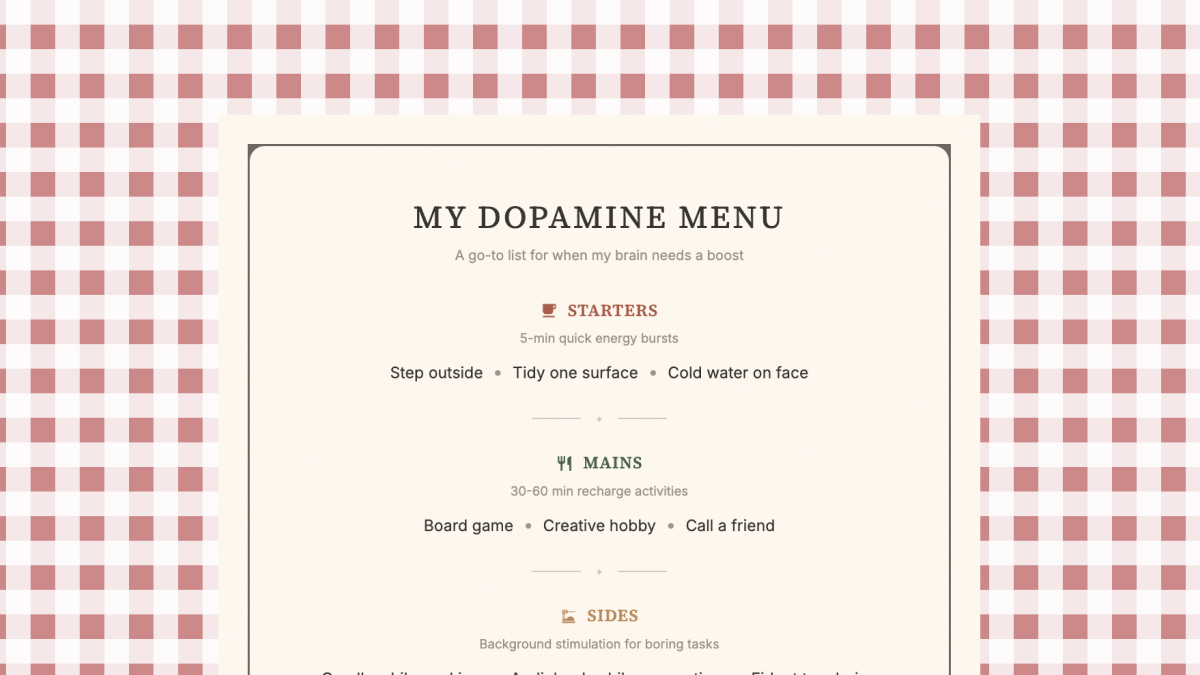
Try the Dopamine Menu
Turn your ideas into a personalised dopamine menu with guided prompts. When you're stuck, it'll suggest something. Free, no account needed.
Start this toolWhen building yours, one useful filter: would you actually do this on a low-energy day? If the answer is "only on a good day," it might be a Dessert or Special rather than a Starter. Sorting honestly by effort level is what makes the menu work when you need it most.
Tools mentioned in this article
Common questions
Start with activities you already enjoy, even the ones that feel "too small" to count. If scrolling dog videos genuinely shifts your mood, it belongs on your menu. You can always swap things out later.
It can, but it doesn't have to. A dopamine menu isn't a disguised to-do list. If tidying your desk genuinely feels good to you, include it. If it feels like a chore, leave it off.
That's expected. Dopamine is personal. These are starting points to jog your thinking, not a prescription. The best dopamine menu items are ones only you would think to include.
Yes. The concept works well for children and teens with ADHD too. Younger people may need help identifying what genuinely feels good versus what they think adults want them to say.