What is ADHD Masking?
ADHD masking is hiding your symptoms to fit in. Learn what it looks like, why it happens, and the hidden cost to your mental health.
ADHD masking is the exhausting work of appearing neurotypical when your brain isn't. Scripting conversations in advance. Suppressing the urge to fidget. Pretending you understood instructions when you didn't. Building invisible systems to hide executive function gaps.
It's not about being fake. It's about survival in a world that wasn't built for your brain.
The three faces of masking
Research breaks masking into three overlapping strategies.
Compensation is active workarounds. Learning social scripts from TV shows. Copying others' body language. Building elaborate reminder systems so you don't forget things. Working twice as hard to produce the same output.
Masking is suppression. Forcing yourself to maintain eye contact. Holding back the impulse to interrupt. Hiding your emotional reactions. Presenting a calm, organised exterior when inside you're drowning.
Assimilation is blending in. Feeling like you're "performing" rather than being yourself. Becoming a social chameleon who changes depending on who you're with.
Most ADHD adults use all three. You've probably been doing it so long you don't notice.
ADHD masking is real
For years, masking research focused on autism. But a 2024 study compared masking between ADHD and autistic adults for the first time.
The findings: ADHD adults mask significantly more than neurotypical people. They work just as hard as autistic adults to hide and suppress symptoms. The main difference is in the specific strategies used.
If you've ever felt like you don't "mask enough" to have real struggles, research says otherwise. ADHD masking is its own experience.
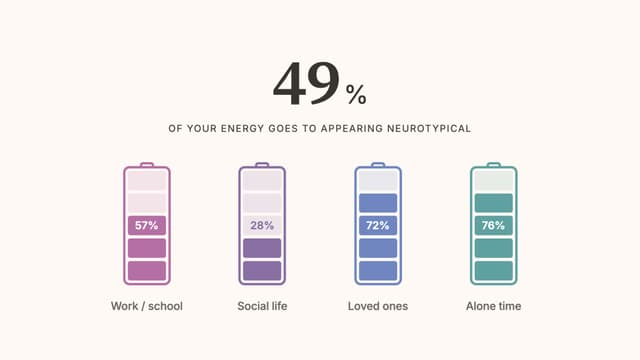
Try the Masking Energy Calculator
See where your energy goes when you're hiding your ADHD. Takes 3-4 minutes.
Start this toolThe mental health cost
Masking isn't free. Research consistently links higher masking to worse mental health.
More masking correlates with more anxiety, more depression, and more social anxiety. The relationship is linear: the harder you work to appear neurotypical, the worse you tend to feel.
This extends to serious outcomes. Masking has been identified as a risk factor for suicidality independent of depression and anxiety.
This isn't about weak coping skills. Masking requires constant cognitive effort. Every moment you're suppressing authentic responses, monitoring your behaviour, and performing neurotypicality, your brain is doing double work.
The path to burnout
Burnout from masking is a real phenomenon. It's defined by three features: chronic exhaustion lasting months, loss of skills you previously had, and reduced tolerance to sensory input.
Masking is a primary driver. This isn't the same as job burnout or depression. It's specifically linked to the sustained effort of appearing neurotypical.
The progression looks like this: you learn to mask to avoid stigma. You sustain masking over years. The effort accumulates into exhaustion. Exhaustion becomes burnout. Burnout can spiral into crisis.
Many people don't connect their burnout to masking because masking has become invisible. It just feels like "trying hard" or "being responsible."
Why we mask
Masking develops as a survival strategy. When showing ADHD symptoms leads to rejection, criticism, or lost opportunities, hiding them makes sense.
The problem isn't that people mask. The problem is they have to.
NICE estimates 3-4% of UK adults have ADHD. Yet recorded diagnosis rates are far lower. That gap represents decades of ADHD adults hiding in plain sight.
When symptoms are invisible, diagnosis gets delayed. When diagnosis gets delayed, masking continues. The cycle reinforces itself.
Recognising your own masking
Masking often operates below conscious awareness. You've been doing it so long it feels like "just who you are."
Signs you might be masking: feeling drained after social situations that others find easy. Feeling like your work self and home self are different people. Needing substantial recovery time after being around others.
The exhaustion is the tell. If social situations consistently deplete you, something's costing energy it shouldn't.
Tools mentioned in this article
Common questions
They overlap but aren't identical. Research shows ADHD adults do mask, but differently than autistic adults. No ADHD-specific masking measure exists yet.
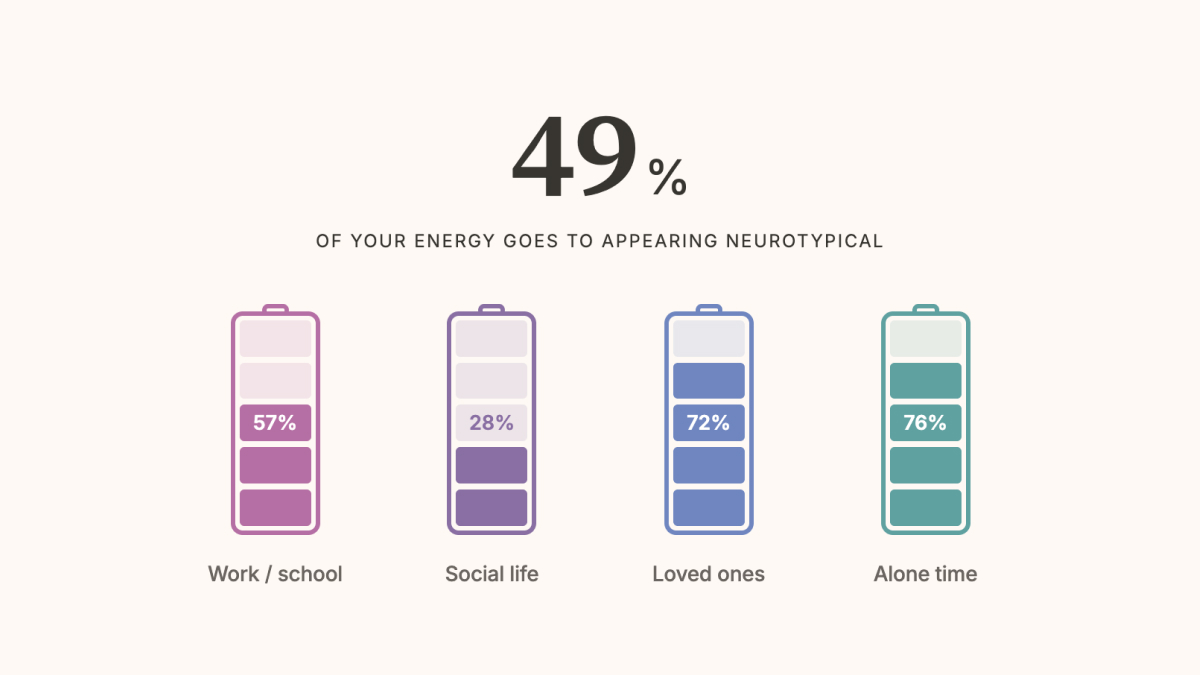
Most ADHD adults report some form of masking, though extent varies. Masking tends to be highest at work, school, and with family, and lowest with neurodivergent peers.
Short-term, yes. It helps navigate neurotypical spaces and avoid discrimination. Long-term sustained masking is linked to burnout, anxiety, and depression.
Signs include feeling exhausted after social situations, feeling like you're "performing" rather than being yourself, and needing significant recovery time after being around others.
Sources & references
- Hull, L., et al. (2019). Development and Validation of the Camouflaging Autistic Traits Questionnaire (CAT-Q). Journal of Autism and Developmental Disorders, 49(3), 819-833.
- Van der Putten, W.J., et al. (2024). Is camouflaging unique for autism? Autism Research, 17(4), 812-823.
- Hull, L., et al. (2021). Is social camouflaging associated with anxiety and depression in autistic adults? Molecular Autism, 12(1), 13.
- Raymaker, D.M., et al. (2020). Defining Autistic Burnout. Autism in Adulthood, 2(2), 132-143.